
In Rooms of Falling Rain
by Tom McLaughlin

Through a range of formal strategies, In Rooms of Falling Rain reflects on how poetic form maps onto queer domestic spaces — both those I have inhabited and those I imagine or historicise. Drawing on thinkers like Katerina Bonnevier, who frames queerness as “the possibility to move, make several interpretations, slide over, or reposition limits”, the poems investigate how spaces of instability, marginalisation, and trauma can be paradoxically fertile ground for creative work. Rather than presenting a straightforward or harmonious relationship between domestic space and poetic form, though, I am interested in exploring the tensions through which particular spaces constrain and generate formal possibilities.
Some of the poems are anchored in historical queer homes, imagining how their spatial and social conditions shaped the lives and poetic voices of their inhabitants. The formal decisions in these poems emerge from my imaginative engagement with those spaces, and with the ways in which domestic circumstances can become entangled with creative practice. Other poems examine contemporary or metaphorical domesticities, always with an eye to how gender, class, and race shape access to privacy, safety, and creative space. Across these different forms of domestic life, the collection interrogates and reimagines the limitations of heteronormative domestic ideals, offering instead a poetics of transience and queer possibility.
At the heart of the collection is also a reckoning with the death of my father and the Donegal landscapes that shaped both his childhood and mine. His presence was a defining force in my experience of domestic life, and his absence opens up new questions about what home means and what remains after it ruptures.
The Donegal poems, with their attention to rural domesticity, act as both anchor and counterpoint to the queer domestic spaces elsewhere in the collection, deepening its meditation on belonging and shelter.
Publication details:
Publisher: Dithering Chaps
Format: Poetry chapbook
Length: 82 pages
Publication date: November 2026
ISBN: 978-1-9192765-4-0
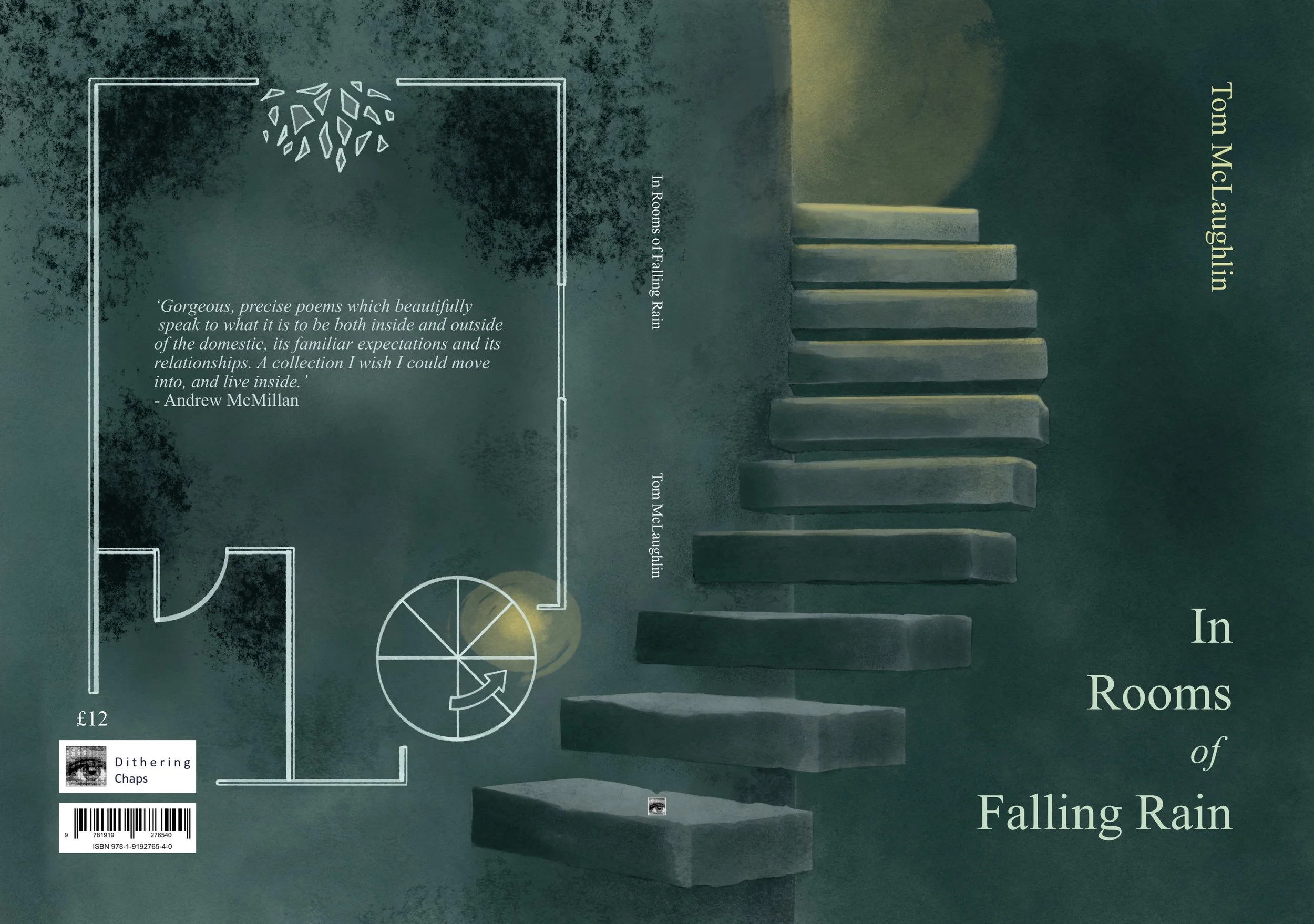
Cover spread for In Rooms of Falling Rain
by Tom McLaughlin
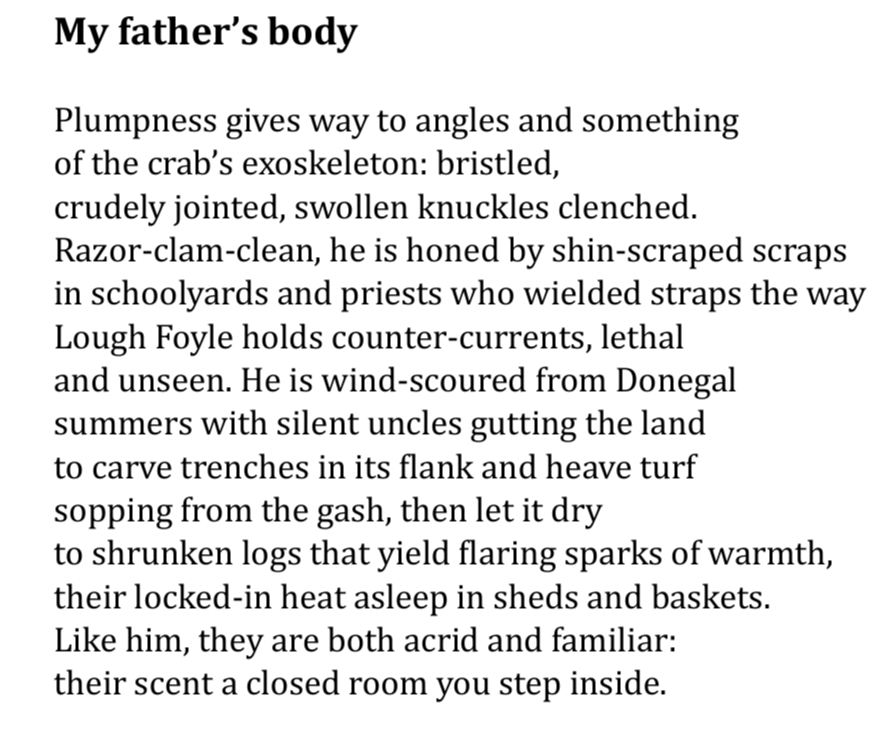
Read a sample poem…
About the author
Tom McLaughlin is a Derry-born poet and critic who grew up on both sides of the Irish border. He studied literature at Oxford, UCL and Royal Holloway, and holds a PhD in Creative Writing from the University of Surrey. He is the author of Open Houses (2021, Marble Press) and Radical Residences: Queer Domestic Space and Poetic Form (2027, Palgrave MacMillan). His poems have featured in anthologies by Arachne Press and Broken Sleep. His critical writing has appeared in Textual Practice. He has been shortlisted for the Bridport Prize, as well as winning Cannon's Mouth sonnet contest and Spelt Nature Poetry Competition. His poetry and criticism explore queer domestic space, form, place and the relationship between creative practice and home.

Reviews
"Gorgeous, precise poems which beautifully speak to what it is to be both inside and outside of the domestic, its familiar expectations and its relationships. A collection I wish I could move into, and live inside"
Andrew McMillan